

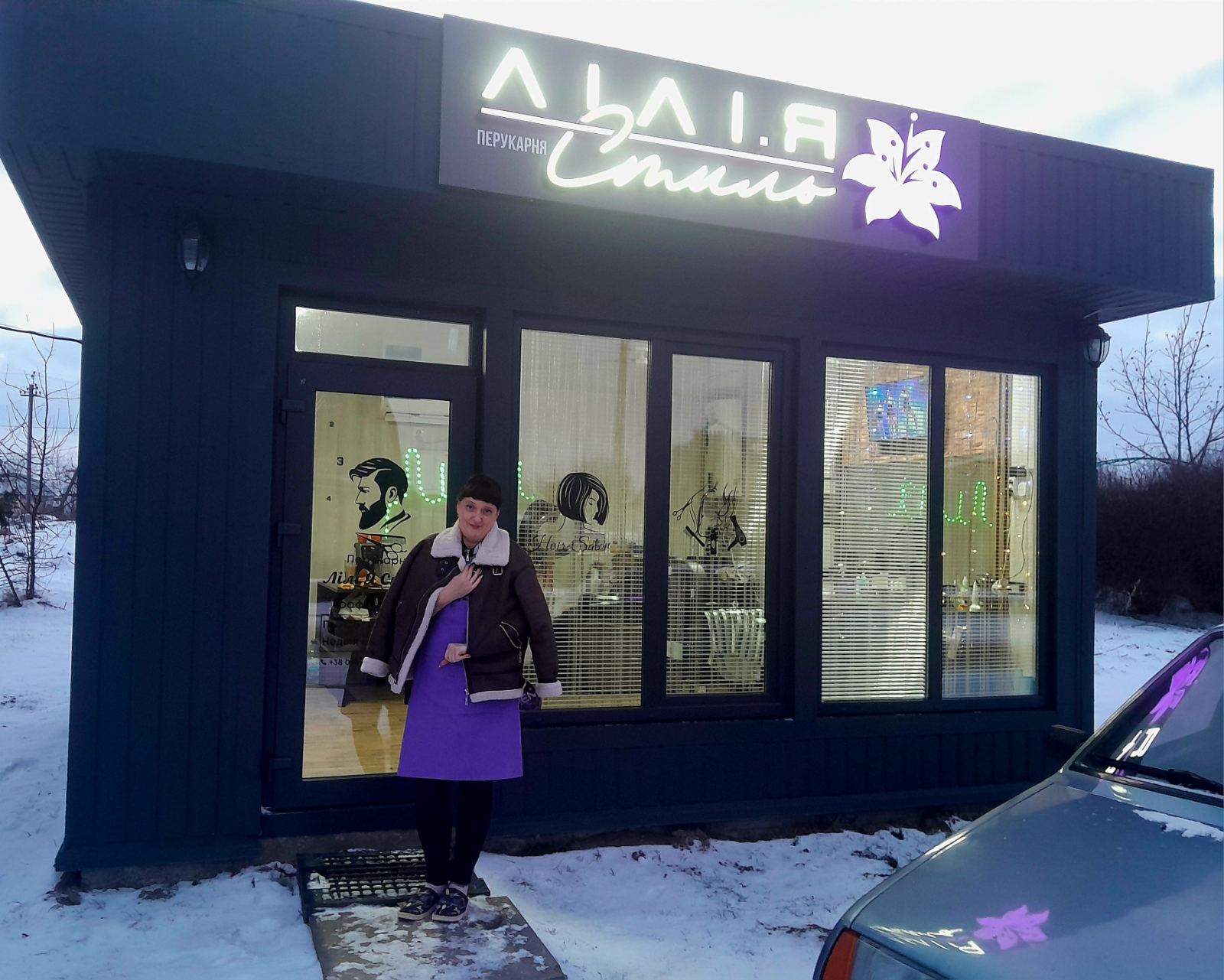
The beauty salon Lili.Ya Style is now operating in the village of Medzhybizh in the Khmelnytskyi region. Local residents can receive hairdressing services close to home. This became possible when Liliia Oliinyk decided to stop commuting to Khmelnytskyi for work and instead create comfort and grow a business in her own village.
“I wanted to be more independent and self-employed. I discussed the idea with my husband, and he supported me, so we decided to start building a hairdressing salon. When the basics were already in place, the war began. For some time, we felt that construction was no longer a priority. I went abroad, worked as a hairdresser, and observed how businesses operate, learning a great deal in the process. Eventually, I returned home and realised that we have to live and keep dreaming,” Liliia says.
Liliia’s husband was mobilised, but one day he called her and said they should finish the construction and start working. At that point, however, they lacked both the funds and the knowledge needed to purchase equipment and launch the business.
“At that time, a friend called me and told me about an opportunity to take part in training and then apply for a grant. During the training, I learned how to run a business, where to start, and which sole proprietor tax group would be most suitable for launching my business,” Liliia recalls.
The business training programme aimed to strengthen women’s economic independence and was designed for members of military and veteran families in the Khmelnytskyi and Lviv regions. It was implemented as part of the project Women. Peace. Security: Acting Together by the Ukrainian Women’s Fund, with financial support from the British Government and the assistance of the Office of the Deputy Prime Minister for European and Euro-Atlantic Integration and the Office of the Government Commissioner for Gender Policy.
After completing the training, Liliia submitted an application and received a grant. With the grant funds, she purchased essential equipment for daily operations, including a hairdressing chair, a thermal cap, a hairdryer, a set of professional tools, an infrared hair treatment unit that works at the molecular level, and other necessary items to provide high-quality services in a salon.
“This grant came at exactly the right time. It allowed me to finally start what I had been postponing for so long. Around 7,000 people live in our community, and previously they had to travel to neighbouring towns to visit a hairdresser. Now they can access these services at home. I also have excellent equipment, such as an infrared unit, which many beauty salons do not have,” Liliia says.
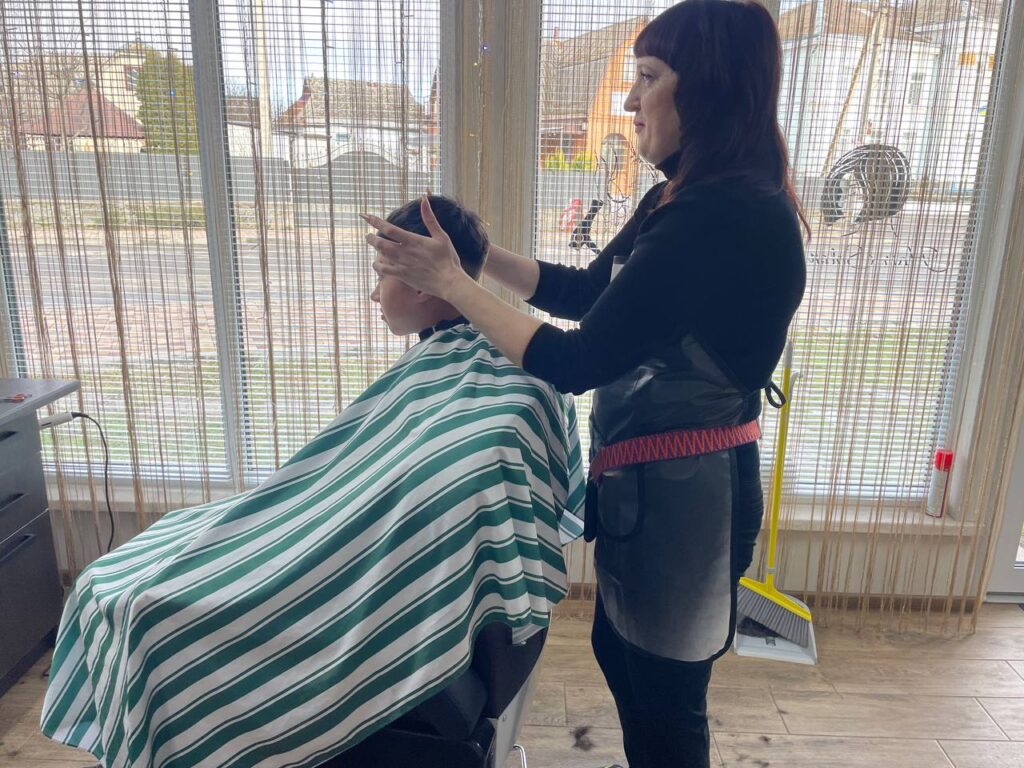 Today, both women and men visit her salon. Clients can get a perm, a haircut, and a professional hair treatment, receiving a full range of hairdressing services.
Liliia plans to continue developing her business and hopes to hire a manicurist and an eyebrow specialist, allowing clients to access more professional services in one location.