

The project provided psychological, legal, social and emotional support for experienced women volunteers, and also created a platform for exchanging knowledge, building cooperation among participants, supporting their professional development and helping them adapt to new social realities. Because support is not only about knowledge. It is also about humanity and a willingness to stand beside one another.
 This initiative is more than training or psychological relief. The organisers created an ecosystem of mutual support and care that enabled participants to gain new knowledge, resources and partnerships for implementing important community initiatives. It has become a powerful catalyst for women who want change in their lives and communities.
Among the participants was Iryna Boltkova, head of the Milove Settlement Military Administration. She shared her experience of managing during martial law and highlighted the importance of supporting women volunteers, strengthening their resilience and recognising their role in community recovery. Her participation demonstrated the essential role of local authorities in such initiatives, as cooperation between government and civil society fosters development, trust, and collective strength.
This project demonstrates effective cooperation among local governments, volunteer networks, and civil society organisations. Such cooperation is vital for addressing community challenges, combining resources, knowledge, and experience; expanding civic participation, increasing trust in local government; and supporting internally displaced people, military personnel, their families, and veterans.
Albina, one of the participants, is a school principal from a frontline town in the Sumy region. She joined the project with a personal intention: not only to share her own experience, but also to understand how those who have been supporting local communities for years live and work.
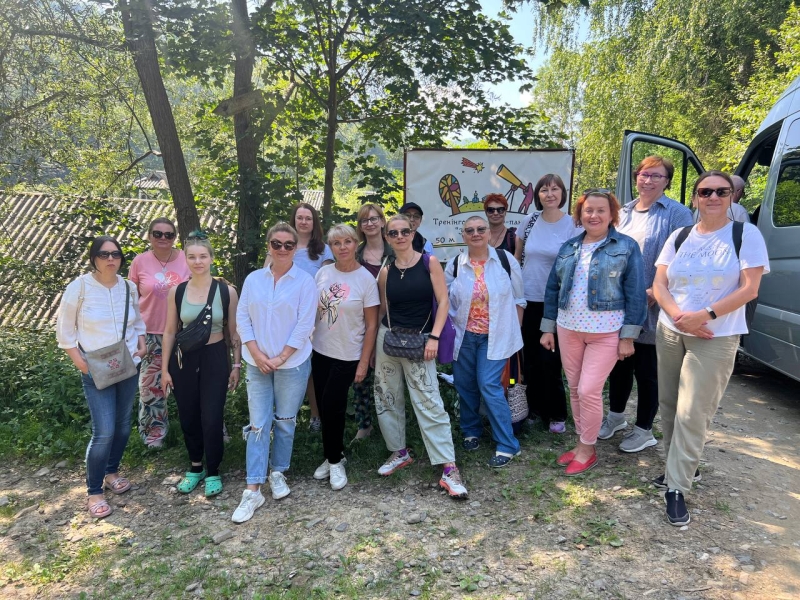 “Women volunteers are a force of their own. They are not always on the front line, but they are always present. And often they do not have the right to show weakness. We discussed fatigue, resilience, and the importance of having a space where you are not judged but supported. I shared my experience of managing in wartime, making decisions that concern safety and life. But most importantly, I listened and learned. This project was not just a meeting for me. It was a reminder that authorities must be present. Not above, not on the sidelines, but in dialogue. When volunteers, communities, organisations and administrations come together, trust is created, and with trust comes the power to change. I saw how women are being reborn, how something new grows from the ashes of experience, pain and exhaustion. And I know that initiatives like this must be supported. They not only heal. They set a movement in motion, and this movement is all about life”, Albina shared.
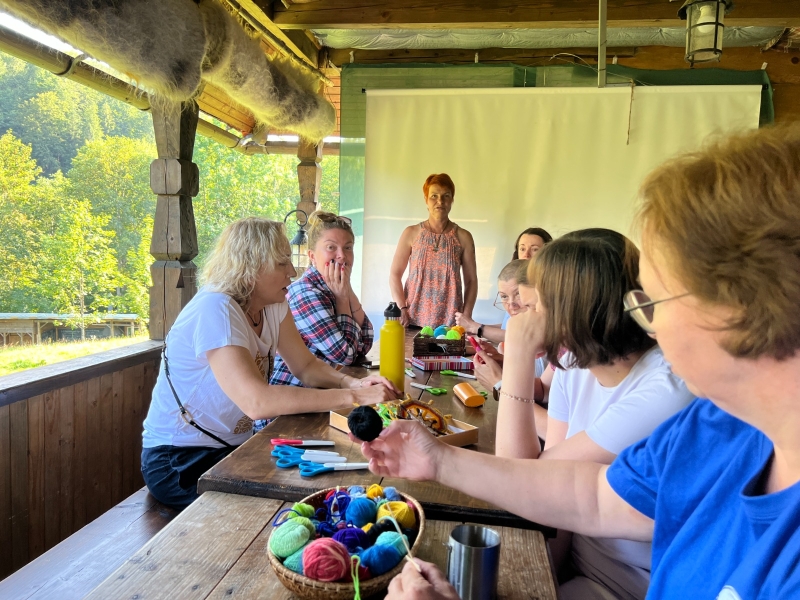
During group sessions, the women not only discussed their challenges but also engaged in creative activities, such as making mandalas, drawing, and sculpting. These simple art therapy practices helped participants in both group sessions and individual consultations with project psychologists to find emotional relief, develop self-regulation skills, better understand their own needs and resources, and strengthen their inner resilience.
Thanks to a safe space for open communication, the women were able to speak about difficult experiences, reduce anxiety, regain motivation to act and develop a desire for further personal growth. Participants also noted increased self-trust and trust in others, improved team communication and a renewed sense of belonging to a supportive community.